
Starting off
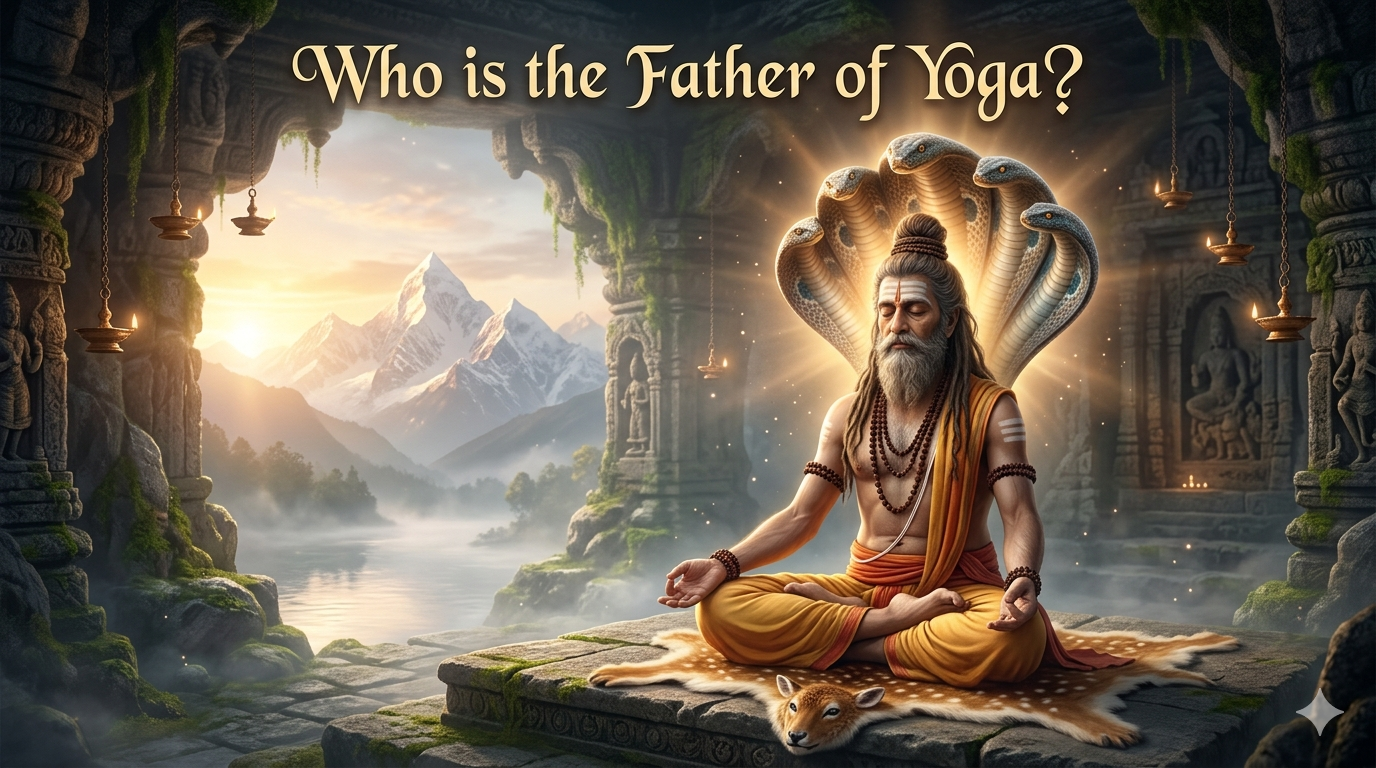
Yoga is a spiritual and health exercise that has been around for a very long time. Yoga is a practice that balances the mind, body, and spirit. Let’s start of Who is the Father of Yoga?
It has its roots in old India and includes breathing exercises, meditation, and moral teachings. When people talk about where yoga came from and what it means, Patanjali is the name that comes to mind.
Many people call him the “Father of Yoga” because he put together a structured philosophical framework for the old yoga practices.
His well-known work, the Yoga Sutras of Patanjali, is still one of the best and most important ways to learn about yoga.
Table of Contents
Who started the practice of yoga?| Who is the Father of Yoga?
Most people agree that Maharishi Patanjali, an ancient Indian sage who lived between 200 BCE and 400 CE (exact numbers are still being debated by historians), is the Father of Yoga.
In ancient Indian customs, yoga was practiced in different ways before Patanjali. But these lessons were spread out in different spiritual books and traditions. Patanjali made a huge difference by putting together a clear and organized guide to the theory and practice of yoga.
He turned yoga from a bunch of different beliefs into a clear spiritual and mental practice through his work.
Also Read : Our Services
Satyanarayana’s Yoga Sutras
Patanjali’s most important work is the Yoga Sutras, which are 196 short sayings (sutras) that explain what yoga is, why it’s important, and how to do it.
There are four parts to the text:
- The Mahabodhi
The point of yoga is to reach a state called Samadhi, which is a deep state of meditation and mental enlightenment.
- A Yoga Practice
The practical way of yoga is talked about in this chapter. It includes discipline, meditation, and living an honest life.
- Veena Pada
Patanjali talks about the spiritual powers and higher levels of awareness that can come from advanced meditation in this section.
- Anubhava Pada
In the last chapter, the greatest goal of yoga, liberation and ultimate freedom, are talked about.
People all over the world who do yoga, teach yoga, or are interested in spirituality still study the Yoga Sutras.
The eight limbs of yoga by Patanjali
Adi Shankara’s Eightfold Path of Yoga, also known as Ashtanga Yoga, is one of his most important lessons. There is a full plan for mental growth and self-discipline in these eight steps.
Yama – Moral limits (nonviolence, telling the truth, and being honest)
Niyama – means self-discipline and following moral rules.
Asana – are the poses that make the body stronger and more balanced.
Pranayama – means controlling your breath and your energy.
pranayama.-Withdrawal of the senses from outside stimulation is called pranayama.
Dharana : Concentration and mental focus are called dharana.
Dhyana: meditating and being aware all the time
Samadhi : The highest level of awareness and spiritual unity is called samadhi.
These ideas are the basis of modern yoga practice.
The reason Patanjali is known as the “Father of Yoga”
Patanjali is known as the “Father of Yoga” for a number of important reasons:
Yoga philosophy that is organized
He put together a structured and easy-to-understand method for teaching yoga.
The Yoga Sutras were written by
This book was the main source of ideas for traditional yoga.
The Eight-Limb Path was described.
His eight-step plan is a useful way to grow spiritually.
Kept old knowledge alive
Many of the old yoga teachings might have been lost without Patanjali’s work.
What Patanjali Did for Modern Yoga
Today, yoga comes in many styles, like Hatha Yoga, Vinyasa Yoga, and Ashtanga Yoga. However, most of these styles still follow the philosophical foundations that Patanjali put out.
People who teach yoga, work with wellness, and are spiritual leaders today still use the Yoga Sutras as a basic guide for yoga theory and meditation.
Because of what he taught, yoga has become popular all over the world as both a spiritual exercise and a way to stay healthy.
Why yoga is important in the modern world
Today, millions of people around the world do yoga. Among its perks are:
- More strength and flexibility
- Less stress and a clear mind
- More air flow and chest space
- Balance your emotions and be aware
- Peace and spiritual growth
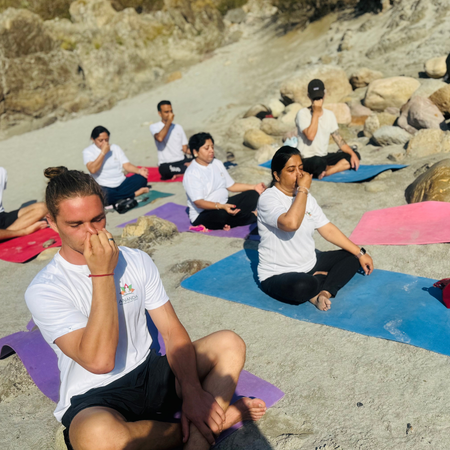
Many yoga centers teach Patanjali’s ideas as part of their yoga programs. This is especially true in Rishikesh, India, which is often called the “Yoga Capital of the World.”
In the end
Many people call Maharishi Patanjali the “Father of Yoga” because his writings laid the intellectual groundwork for classical yoga.
Through the Yoga Sutras, he put together old yoga knowledge into a clear, step-by-step plan for getting healthy, free in spirit.
People who practice yoga all over the world still follow Patanjali’s lessons, even though they were written thousands of years ago.
He was one of the most important people in the history of spiritual and health movements because his teachings are still at the heart of yoga today.